Bring Your Own, Bring Your Best: A Fair Deal on Corkage
The bottle under the arm
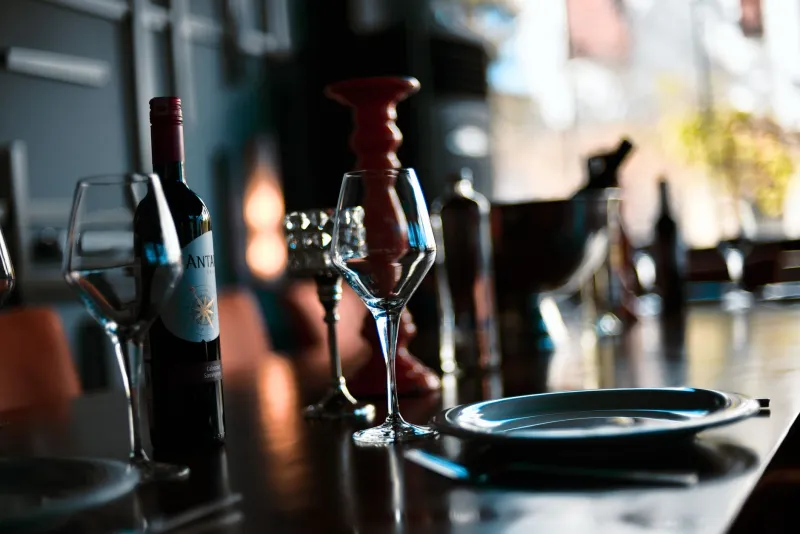
There is a particular look that crosses a dining room when a guest arrives with a bottle under their arm. It is not quite a smuggler's look, and not quite a gift. It is the look of someone who has made a decision and is hoping the room will agree with it. Corkage, at its best, is the moment that decision is met with a sensible answer rather than a raised eyebrow.
In the UK, bringing your own wine to a restaurant still carries a faint whiff of the illicit. Some lists treat it as an insult; some guests treat it as a right. Both positions are too dramatic. Corkage is a service, not a loophole. And in 2026, with restaurant margins still tight and wine prices still shifting, it is worth saying plainly what a fair deal looks like.
The awkward arithmetic of a bottle
A restaurant sells wine for more than it pays for it. That is not a scandal; it is how the lights stay on. The mark-up covers storage, glassware, staff training, the bottle that gets opened and does not sell, and the sommelier who spends a Tuesday afternoon tasting instead of tweeting. When a guest brings their own bottle, the restaurant still provides the room, the ice bucket, the decanter, the clean glasses, the service and the washing-up. Corkage is the price of that hospitality, not a tax on thrift.
The trouble starts when the fee is invisible until the bill arrives, or when it is set so high that it feels like a punishment. A £35 corkage charge on a £12 bottle is not a policy; it is a hint that the guest has misread the room. Equally, a restaurant that charges £5 and then quietly resents every BYO table is not being generous; it is being passive-aggressive with a corkscrew.
What a fair corkage policy looks like
A good policy is short enough to fit on the list and clear enough to be understood before the bottle is opened. It should state the fee per bottle, whether it applies to every bottle or only to wine not already on the list, and whether there is a limit per table. It should say what is included: decanting, ice, glassware, service. It should be the same on a quiet Tuesday and a busy Saturday. And it should be applied with the same courtesy whether the bottle cost £9 or £90.
At a wine-led restaurant, there is a strong case for keeping corkage modest on the first bottle and firmer on the third. That is not about punishing enthusiasm; it is about protecting the table's place in the room. A couple who bring one special bottle and order a starter, a main and a glass of something else are not exploiting anyone. A table of eight who bring six bottles and order tap water are having a different kind of night. The policy can acknowledge both without turning into a tribunal.
How to read the fee
Guests should read corkage as part of the cover charge, not as a fine. If the fee is £20 and the bottle is something you have been saving, the question is not whether the restaurant is making money on your wine. It is whether £20 is reasonable for the glasses, the decanting, the service and the seat. Often it is. Sometimes it is not. The answer depends on the room, the list and the night.
It also helps to ring ahead. A quick call — 'We would like to bring a bottle for a birthday; what is your corkage?' — does more for the evening than any amount of silent expectation. It gives the restaurant a chance to say yes properly, to chill the wine, or to suggest a glass from the list that would sit alongside it. That is not bureaucracy. It is the beginning of a conversation.
Trust, not a loophole
The real argument about corkage is not about money. It is about trust. A restaurant that publishes a fair fee is saying: we know you might have a bottle you love, and we are confident enough to let you bring it. A guest who asks first and orders food is saying: we want to be here, and we want to drink well. Both sides give up a little control. That is usually where the best nights start.
Corkage will never be the main event at a wine-led restaurant. It should not be. The list is the point, and the by-the-glass pour is the invitation. But a sensible corkage policy is a small, visible sign that the room is run with generosity and clear eyes. In 2026, that is worth more than a clever mark-up. Bring your own, bring your best — and bring a little patience for the people who are going to open it for you.