The Case Against the Tasting Sheet: Why the Best Wine Nights Are the Ones You Don't Plan
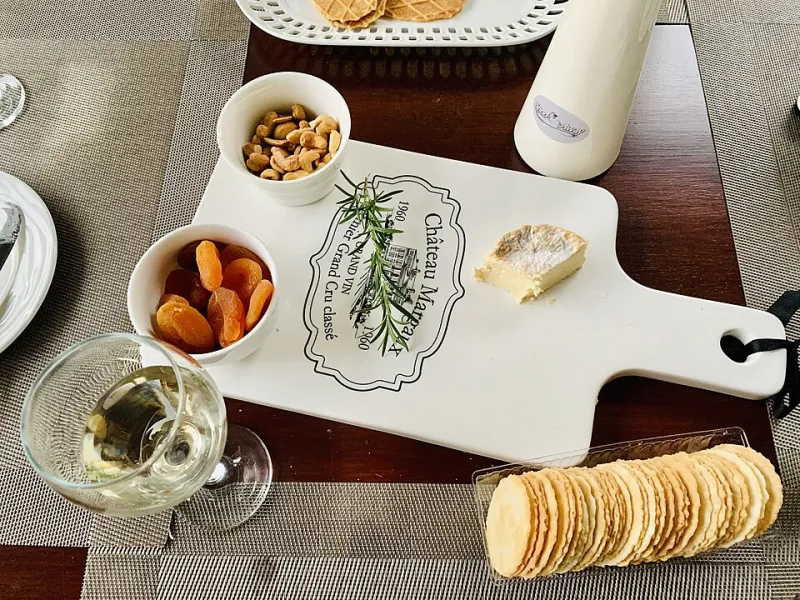
Photo: Kgbo, CC BY-SA 4.0, via Wikimedia Commons
A confession, offered in the spirit of the season: some of the best evenings we've had around a table began with a text at five o'clock. No decanting schedule, no flight of six carefully ordered glasses, no printed tasting grid. Just a message that read something like: I've got a bottle of something odd and half a Comté, are you in?
That is, more often than not, the whole blueprint.
The trouble with the tasting sheet
Let's be clear: tastings have their place. If you want to understand why Chablis tastes different from Chardonnay grown in the Adelaide Hills, a structured flight is the fastest route to the answer. Education has value, and we host tasting evenings ourselves.
But there is a particular kind of evening where the apparatus takes over. The spittoons appear. The tasting notes come out. Someone says 'I'm getting petrol' with a straight face and everyone nods while privately wondering whether that's a good thing. Guests start monitoring their own impressions against a grid, and the room goes quiet in that specific way rooms go quiet when people are worried about getting the answer wrong.
Wine, at that point, has stopped being a drink and become a test. It's a strange fate for something fermented in a barn.
What actually happens when you let go
Something loosens. The second bottle is almost always better than the first — not because the wine is better, but because by then nobody is performing. Conversation has moved from the wine to the people, which is where it belonged all along.
We've watched a bottle picked up on a whim from a shop near the station outshine a very serious Burgundy, purely because the person who brought it had a story about the trip. We've seen a cheap Lambrusco rescue a table that had gone too polite. The wine that gets remembered is rarely the most expensive one; it's the one that arrived attached to a person.
Warmth is a logistical exercise
Atmosphere doesn't happen by accident. It happens because someone did a bit of quiet preparation and then had the good sense to leave it alone.
Light the room properly. Lamps, candles, a dimmer if you have one. Overhead lighting makes a kitchen feel like a showroom and a dining room feel like a waiting area.
Keep the food coming, not the speeches. Bread, olives, something salty and something to dip. People relax when their hands are busy and nobody is being asked to admire anything.
Have more glasses than you need. They don't need to match — mismatched glassware is a feature, not a flaw. The same goes for chairs; a squeezed-in stool is a compliment.
Do the boring bits early. Water on the table, a decanter within reach, reds out of the fridge half an hour ahead, whites in it. Temperature is the least glamorous variable and the one that ruins the most good bottles.
Play something low. Background music at a volume where people can hear each other without raising their voices. That's the whole brief.
Bottles that say yes to everything
If you're hosting loosely, keep a small standing arsenal of wines that don't need food, don't need explanation, and don't fall over when someone arrives with a curry.
A dry Riesling is the most flexible white in the world and everyone forgets it. Unoaked Chardonnay or a modest Chablis covers roast chicken and anything with butter. A light red — Gamay, young Pinot, a juicy Blaufränkisch — handles charcuterie and doesn't punish a guest who only drinks red. A bottle of dry sherry in the fridge is a host's secret weapon for the first half hour, served cold with almonds. And something with bubbles, always, because fizz turns a Tuesday into an occasion with a single pop.
Buy two of anything you love. One to open, one to keep — or, more realistically, one to open and one because it turns out you're opening the first one faster than planned.
The host's only real job
Pour generously, keep the plates moving, and resist the urge to lecture. Ask people what they taste rather than telling them. Let someone dislike the wine you adore; it costs you nothing and it usually starts the best conversation of the night.
Know when to stop pouring, too. The difference between a convivial evening and a messy one is often a single, quietly withheld glass and a large jug of water at eleven o'clock. Nobody remembers the host who poured the ninth bottle. Everybody remembers the host who made sure there was coffee and a taxi number.
The unplanned night, in practice
It's a Thursday. Someone turns up with a bottle from a shop they've never been in before, a hunk of cheese, and a vague apology. There are leftovers, cold potatoes, some good bread warmed in the oven. Nobody takes notes. The conversation drifts from work to a holiday to whether anyone actually enjoys sherry (they do, they just don't know it yet). Two hours pass, then three. The table doesn't get cleared properly until the last person stands up.
No tasting sheet survives that. That's the point.
We host structured evenings because they're fun and worth doing properly. But the nights we talk about afterwards — the ones that build the restaurant's whole idea of itself — are the ones where a plan fell apart in the right direction. A glass, a plate, a few people, and enough time. That's a convivial night, and it hardly ever needs booking.