Pale and Interesting: Why Your Mushroom Supper Wants Sherry, Not Shiraz
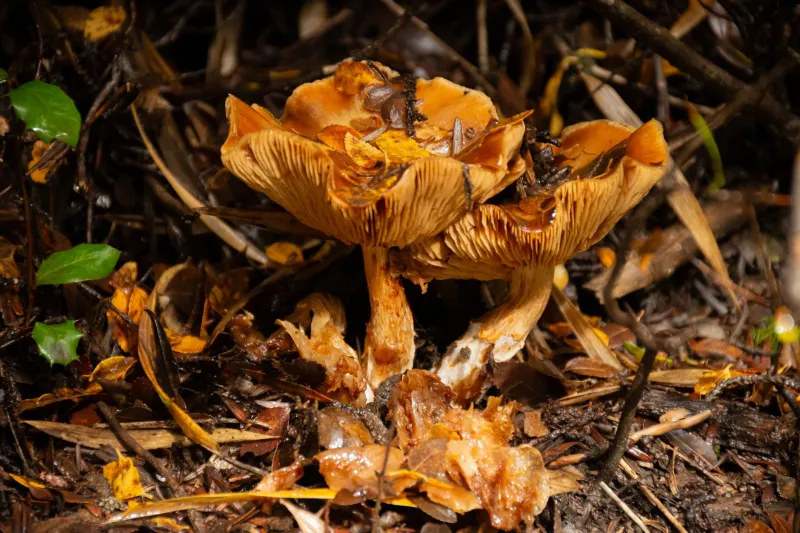
There is a moment, somewhere in the third week of November, when the mushroom display at the market stops looking like a side dish and starts looking like the whole point. Girolles the colour of egg yolk. Trompettes de la mort stacked like little charred gramophones. Chestnut caps with the pleasing heft of a good pebble. You buy far too many, carry them home in a paper bag that smells faintly of damp forest floor, and then — almost by reflex — reach for a red.
Stop. Put the Shiraz down. It has done nothing to deserve this.
The Trouble With Red and the Earthy Plate
I understand the instinct. Mushrooms are dark, meaty and autumnal, and red wine is dark, meaty and autumnal, so we assume they belong together. But the flavours in a pan of mushrooms are not really dark at all. They are savoury, yes, but also buttery, nutty, faintly sweet and — crucially — delicate. A young, tannic red lands on that plate like a heavy boot on a patch of moss. The tannin grips, the fruit sulks, and the mushroom loses.
What mushrooms actually want is acidity to cut the butter, a savoury edge to meet the earth, and a texture that is either silky or saline rather than dusty. Which is why the most reliable bottles on a mushroom table tend to be pale in the glass.
Sherry Is Not a Joke, It Is a Tool
Forget the Christmas bottle at the back of the cupboard. Dry sherry is one of the most food-friendly wines in Europe, and it has an almost unfair advantage with fungi.
A fino or manzanilla — chilled hard, poured into a small glass — brings a salty, chamomile-and-bread quality that makes sautéed girolles taste more like themselves. It is brilliant with a plate of mushrooms on toast, where the sherry's tang slices through the butter. Amontillado, with its hazelnut middle and longer finish, is the one for cream sauces and thyme. And an oloroso — dry, not sweet — handles the darker, meatier end of the pan: a mushroom and lentil ragù, perhaps, or a pie with a suet crust.
Serve them in wine glasses rather than thimbles. A 75ml pour in a proper glass is a civilised thing, and it keeps the bottle moving around the table.
The Quiet Case for Old White
Aged white Rhône is the great underrated mushroom wine. A white Hermitage or Saint-Joseph blanc with five or six years on it loses its puppy fat and gains a waxy, honeyed, almost lanolin texture that sits beautifully next to buttered mushrooms. It has weight without tannin, and just enough bitterness on the finish to keep the plate honest.
Mature Chardonnay does a similar job from a different angle. A white Burgundy at five to eight years old — or a serious English still Chardonnay from a good vintage — brings a nutty, savoury depth that flatters ceps and chestnut mushrooms in particular. The oak needs to have settled down. You want the memory of a barrel, not the barrel itself.
Cooking Notes That Help the Bottle
A few practical things. Salt your mushrooms late, not early, or they will weep and steam rather than brown. Use a wide pan and do not crowd it. Butter is good; butter with a spoonful of olive oil is better, because it stops the butter burning. A splash of sherry in the pan — the same one you are drinking, ideally — deglazed with a little stock makes an instant sauce that tastes like it took an hour.
And go easy on the garlic. Mushrooms are generous; they do not need to be shouted at. Thyme, parsley, a little lemon zest at the end: that is usually enough.
A Plan for a November Supper
Start with a glass of manzanilla and a bowl of salted almonds while the mushrooms are cleaned. Then bring out mushrooms on toast — thick sourdough, plenty of butter, a squeeze of lemon — and keep the sherry going. For the main event, a mushroom and barley pilaf or a creamy mushroom tart, with a bottle of aged white Rhône and a mature Chardonnay side by side. Let people choose. The argument at the table is half the fun.
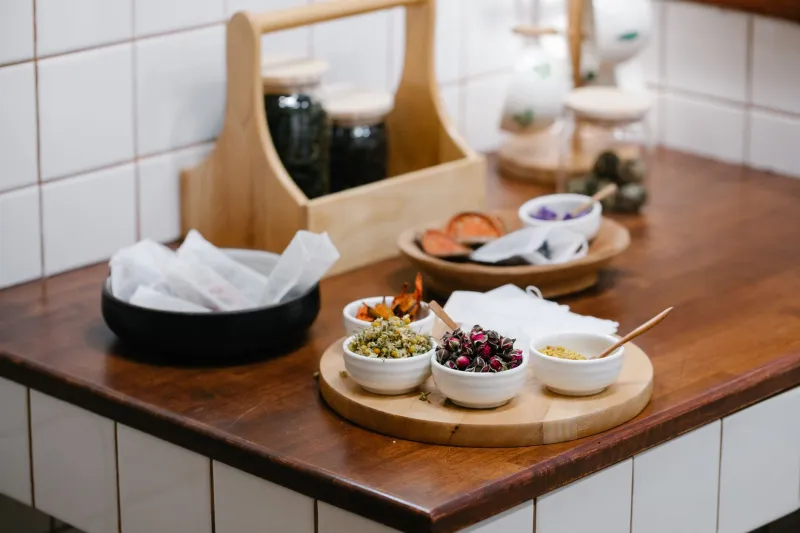
Finish with something simple: a slice of quince paste and a small glass of amontillado, or a cup of tea if the night has gone on long enough. No need for a pudding. The mushrooms have done their work.
The Last Word
None of this is a rule. If you have a light, low-tannin red — a pale Burgundy, a cool-climate Pinot — it will not ruin the evening. But the pale bottles do something more interesting. They make the mushrooms taste like the woods they came from, and they leave you room for another glass. That is a November supper worth having.