Sharpen, Don't Sink: The Quiet Art of the Pre-Dinner Pour
November has a way of pushing us indoors and straight into the deep end. It is half past six, the pavements are wet, the coats are heavy, and someone suggests a round of something strong while we look at the menu. By the time the food arrives, the appetite has been politely asked to leave and the conversation has turned into a pub. There is a better way, and it is older than the cocktail list: one small, deliberate drink before dinner.
The first drink is a door, not a diversion
The word aperitif comes from aperire, to open. That is the whole job. It is not there to get the evening going at full volume; it is there to open the appetite, open the conversation, and mark the line between the day and the table. On the continent this is second nature. In the UK we have spent a few decades confusing the aperitif with pre-drinks, which is a different animal altogether: faster, stronger, louder, and usually standing up.
A proper pre-dinner pour is a threshold. It says: sit down, take your coat off, have a look at what is around you. It is a courtesy to the kitchen, too. A sharp glass before a rich autumn supper does more for the first course than any amount of enthusiastic chatter.
What sharpening actually means
An aperitif works on the palate in a fairly simple way. Bitterness, salt, acidity and a modest amount of alcohol tend to wake things up. Sugar and high strength tend to close them down. That is why a chilled fino sherry with a bowl of olives feels like a beginning, while a double negroni feels like a decision you may regret by the cheese course.
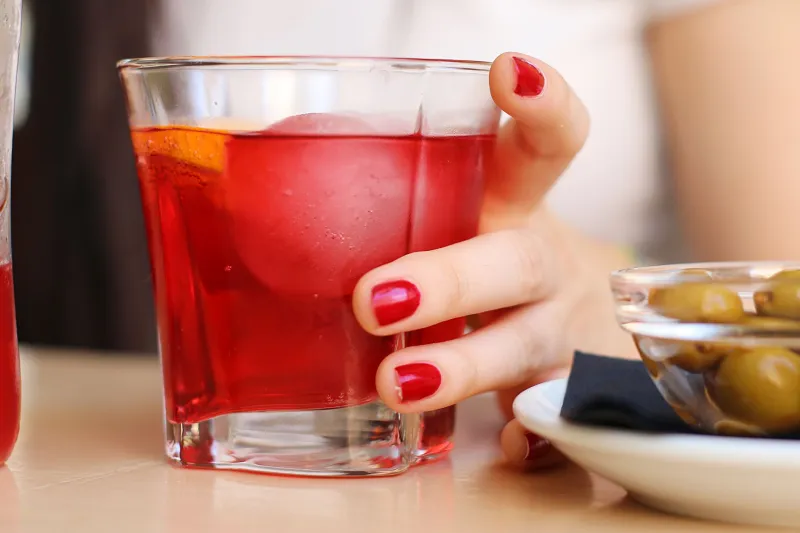
The styles to look for are not obscure. Dry vermouth, served over ice with a strip of orange peel. Fino or manzanilla, cold and saline, with something small and salty nearby. Champagne, crémant or English sparkling wine, bone dry rather than fruity. A bitter aperitif such as Campari or Select, lengthened with soda and a slice of lemon. None of these needs to be a performance. A small glass is the point.
Ordering one without making a speech
In a UK restaurant, the aperitif is often hiding in plain sight. If the list has a section headed aperitivi, aperitifs or something similar, start there. If it does not, look for vermouth by the glass, sherry, or sparkling wine sold in small measures. A good list will usually have one or two things open that are lower in alcohol and drier than the cocktails.
Ask what is open by the glass and whether it is served chilled. Ask for the vermouth over ice with an orange twist, not a glass of something syrupy with a cherry in it. If the only sherry is cream, leave it. If the only sparkling is a sweet prosecco, look for a dry cider or a bitter aperitif with soda instead. And if the cocktail list is a wall of spirit-forward classics, it is perfectly reasonable to order a small glass of dry white or a pale rosé and call it what it is: a start.
The twenty-minute rule
The aperitif should arrive before the ordering gets serious. That is not a rule about clock-watching; it is a rule about attention. You want a few minutes with the list, a few olives, a little less hunger than when you walked in, and a little more appetite than when the starters land. The sweet spot is roughly twenty minutes.
This is where the nibbles matter. A small bowl of almonds, a few green olives, a handful of good crisps: these are not the meal, they are the handshake. The bread basket is a different matter. If you are genuinely hungry, eat the bread. But if the aim is to arrive at the first course with a pulse, keep the pre-dinner food light and salty rather than soft and buttery.
Why this suits November better than a session
The food of late autumn is generous and often rich: game, mushrooms, roots, braises, cheese. A sharp, modest glass before all that is a palate-cleanser in advance. It cuts through the memory of the last meal and makes room for the next one. It also keeps the evening at a civilised volume. A round of strong cocktails tends to turn dinner into a party before the food has had a chance to speak. A single aperitif turns dinner into dinner.
There is a convivial pleasure in this that is easy to miss. One glass, shared or not, gives everyone at the table something to do with their hands while the menu is read. It gives the evening a shape. It also gives the person who is not drinking a place to stand: a bitter lemon, a good tonic with citrus, a small glass of something low in alcohol. The ritual is the point, not the alcohol.
Three orders to keep in your pocket
Dry vermouth over ice, with an orange twist and perhaps a single olive. Fino or manzanilla, served properly cold, with salted almonds. English sparkling wine, dry and chilled, or a bitter aperitif with soda and lemon. Any of these will do more for a November supper than a tray of espresso martinis.
The small glass before is not an indulgence. It is a way of paying attention: to the season, to the kitchen, and to the people across the table. Order one, sit down a little hungrier than you were, and let the evening start at the right volume.