Under the Crust: Why Winter Pie Wants a Fresher Pour
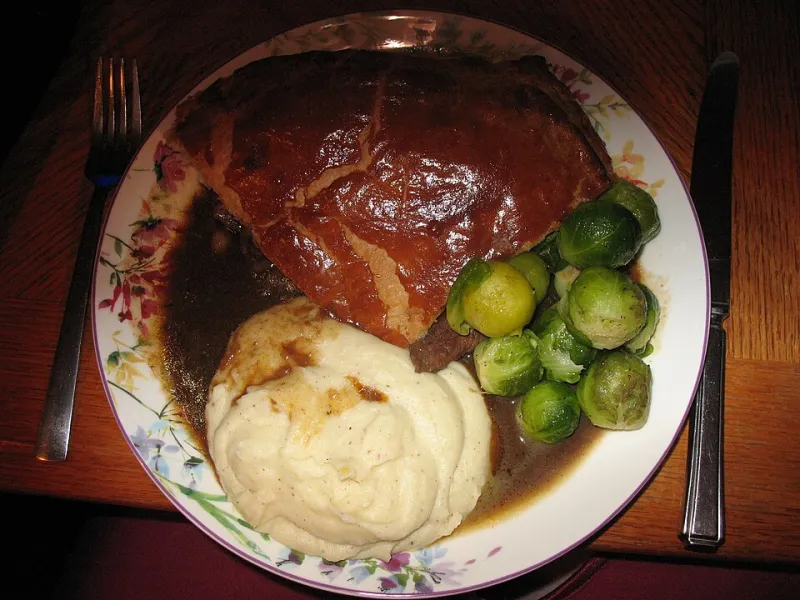
Photo: CharmaineZoe's Marvelous Melange from England, CC BY 2.0, via Wikimedia Commons
There is a reflex, when the first proper frost arrives, to reach for the heaviest red on the shelf. Something dark, something oaky, something that looks like it has been aged in a wardrobe. It is an understandable instinct. Pie is comfort food, and comfort food is supposed to come with a big, warm hug of a wine. But the hug is not always the point. Sometimes the better move is a glass with enough freshness to cut through the crust, the gravy and the butter, and enough earthy savour to meet the filling halfway.
This is not a argument against bold wine. It is an argument for putting the pie first and letting the wine answer the plate rather than the calendar. A good British winter pie — steak and ale, shepherd's, or a chestnut-and-squash version — is not a monolithic block of richness. It has salt, savour, sweetness, starch and, if you are doing it properly, a sharp pickle on the side. That is a moving target. Heavy oak and thick tannin can easily smother it. A lighter red with real acidity often makes the whole thing taste more like itself.
The case against the big red reflex
Steak and ale pie is the classic test. The filling is deep and malty, the pastry is rich, and the gravy is salty enough to make you reach for something with fruit. The temptation is a big Cabernet or a heavily oaked Shiraz. Sometimes that works, especially if the pie is enormous and the wine is generous. But more often the tannin lands on the roof of your mouth like a dry coat, and the oak adds a vanilla note that makes the ale taste bitter rather than broad.
What you want instead is a red with shape. Fresh acidity lifts the fat in the pastry. Moderate tannin gives structure without scraping the palate. Earthy, leafy notes — the sort you get in Cabernet Franc, Mencía or a good Gamay — meet the savoury notes in the filling rather than fighting them. The wine does not need to be thin. It needs to be awake.
The same logic applies to shepherd's pie. Lamb, Worcestershire sauce, a mash top with a bit of crust: it is a gentler plate than steak and ale, but it still has a lot of salt and fat. A light-to-medium red with a savoury edge is far more useful than a blockbuster. And for a vegetarian chestnut-and-squash pie, the risk of a heavy red is even clearer. Squash brings sweetness, chestnut brings starch and earth, and a big oaky wine can make the whole thing taste like a sweetened bonfire. A bright, crunchy red — or even a textured white — keeps it lively.
Three pies, three pours
Steak and ale: Cabernet Franc from the Loire
Look for a Saumur-Champigny or a Chinon. Cabernet Franc has the leafy, pencil-shaving savour that loves ale and beef, plus enough acidity to refresh the palate after each forkful of pastry. Serve it slightly cool — around 16°C, not radiator temperature — and decant for twenty minutes if it is young. It will make the pie taste more savoury and less heavy. If you want a named bottle rather than a region, ask a good independent for a Loire Cabernet Franc with a little bottle age and no heavy oak. The point is freshness, not fashion.
Shepherd's pie: Mencía from Bierzo
Mencía is a brilliant British restaurant wine because it sits between Pinot Noir and Syrah in weight, with dark berry fruit, a smack of acidity and a fine, dusty tannin. It handles lamb and Worcestershire sauce without turning jammy, and it has enough earthy grip to make the mash taste like more than mash. A young Bierzo Mencía, served in a decent glass, is one of the most flexible reds you can put on a winter table. It also works if the shepherd's pie has a swede mash top, which is a quietly underrated variation.
Chestnut and squash: Gamay from Beaujolais-Villages
For the vegetarian pie, reach for Gamay. Beaujolais-Villages, or a cru such as Fleurie if you want something more floral, gives you crunchy red fruit, bright acidity and a light, granitic texture. It will not overpower the chestnuts. It will make the squash taste sweeter and the pastry taste cleaner. Serve it cool. If you want a white instead, a dry Chenin Blanc from the Loire or a textured Savagnin would do something similar: acid first, earth second, oak nowhere near the front.
Pickles, gravy and the moving target of match
A pie is rarely served alone, and the sides change the wine more than most people admit. A sharp pickled onion or a spoon of piccalilli will make a brisk red feel rounder and fruitier. That is useful if your wine is on the lean side. But it can also make a very tannic wine taste metallic, which is one more reason to keep the red in the lighter register. Salty gravy flatters a wine with modest tannin and good acidity. A heavily oaked wine can suddenly taste dry and hollow next to it. And chips — proper chips, not the pale, sad sort — bring their own fat and salt, which is another vote for freshness.
If you are serving mushy peas or buttered greens, think about texture as well as flavour. Peas are sweet and starchy; greens are bitter and clean. A wine with a little herbal edge, like Cabernet Franc or Mencía, will handle both. A fruit-bomb red will not. This is not about being precious. It is about noticing what is actually on the plate.
Why pie belongs on a wine-led menu
At Vine, we like a pie on the menu for the same reason we like a good wine list: it rewards conversation. A pie is shareable in spirit even when it is served whole. It invites sides, pickles and second helpings. It does not demand ceremony. And it gives a wine team something to work with — salt, fat, pastry, gravy and a filling that can be beef, lamb or vegetable. That is a broader matching brief than a plain steak, and a more interesting one.
A pie also suits the way people actually drink in a restaurant. You can open a bottle of something fresh and earthy, pour it by the glass, and let the table decide whether they want a second. You do not need a trophy wine. You need a wine with enough character to stand up to gravy and enough acidity to keep you coming back. That is the argument, really. The pie has the floor. The wine just needs to know when to speak up and when to step back.