A Gentle Timetable for the Longest Lunch of the Year
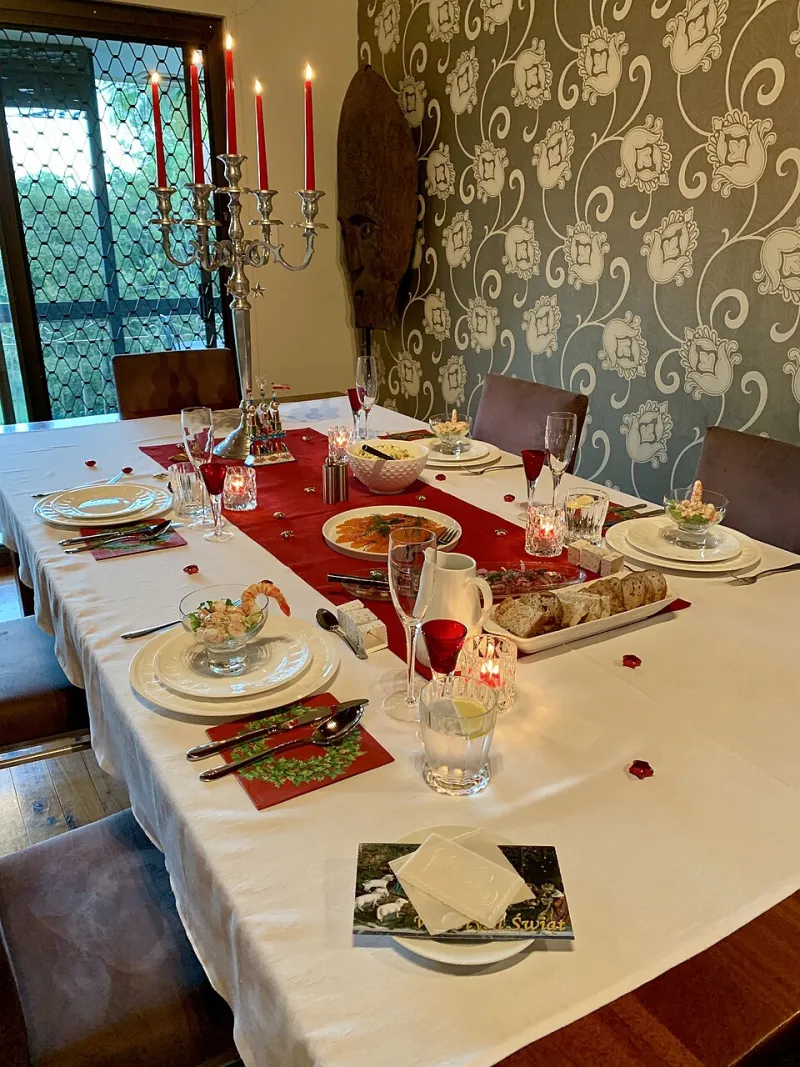
Photo: Chris Olszewski, CC BY-SA 4.0, via Wikimedia Commons
The mistake most of us make with Christmas Day wine is treating it like a restaurant service: a sequence of courses, each with a bottle chosen in advance, each bottle opened at the appointed minute. Christmas Day is not a restaurant. It is a long, warm, slightly chaotic lunch with a bird that has its own ideas about timing. The wine should follow the cooking, not the clock on the wall. Still, a little shape helps. Here is a gentle timetable — not a schedule to obey, but a way to keep the day from becoming a shift behind the bar.
Start With Something That Doesn't Need Your Attention
The first pour of the day should be the easiest decision you make. Open a bottle of English sparkling wine at about half past ten, or whenever the first person arrives and starts peeling sprouts. Serve it in a normal white-wine glass if the flutes are still in the loft. Flutes look festive and taste of very little; a wider glass lets the wine breathe and makes the first glass last longer. Chill it properly — an ice bucket with water and a good handful of salt will do it in twenty minutes — but don't freeze it. The point of this glass is not ceremony. It is to make the kitchen feel less like a workplace.
Chill Ahead, Not On the Day
Christmas Day is not the moment to discover that the fridge is full of turkey and there is no room for white wine. Put the whites and the sparkling in the coldest part of the fridge the night before, or in a cool porch if the weather is doing what it usually does in December. Reds do not need the radiator. Pull them out of the cupboard an hour before lunch and let them sit in the coolest room in the house. If you have a garage or a shed, use it. The old idea that red wine should be served at room temperature was invented for houses that were colder than ours. In a modern kitchen with the oven on, room temperature is a euphemism for too warm.
When the Bird Runs Late
The turkey is not a train. It will not arrive at the platform because you opened the good Burgundy at two o'clock. This is the single most useful thing to remember about Christmas Day drinking: do not open the wine you are looking forward to until the food it belongs to is actually on the table. If lunch is running late — and it will — open a holding bottle instead. A dry sherry, a crisp white, a light red from the fridge: something that can sit in a glass while you spoon fat over potatoes and answer the same question about the oven timer. Keep a small bowl of nuts and a wedge of cheese nearby. A cook who has had a glass and a bit of cheese is a calmer cook. A cook who has had three glasses and no food is a hazard.
Two Glasses and a Rinse
You do not need a different glass for every wine. Two shapes will see you through: a decent all-purpose wine glass, and a smaller glass for the fortified finish. If you want to be fancy, add a white-wine glass for the sparkling and the whites. Rinse them in hot water between courses and dry them with a clean tea towel. Do not wash them with soap just before dinner unless you enjoy the taste of washing-up liquid in your Champagne. And do not polish glasses in front of guests while they are waiting for gravy. It makes everyone nervous.
The Red, and the Argument About It
Open the red when the main course is nearly ready. If it is young and tannic, pour it into a jug and leave it for twenty minutes. If it is old and fragile, just open it and pour. Turkey is not beef; it does not need a blockbuster. A lighter red — Pinot Noir, Gamay, a cool-climate Cabernet Franc — will do more for the bird than a heavy Shiraz. But this is not a shopping list. It is a reminder that the wine should be chosen for the plate in front of you, not for the label on the bottle. If you have a white you love and a red you love, open the white with the turkey and the red with the cheese. Nobody will call the police.
Pudding, Then Port
Christmas pudding is sweet, dense and full of dried fruit. It wants something with acidity and a little fire. Tawny port is the classic, but a Pedro Ximénez sherry or a sweet Madeira will do the job with more drama. Pour small glasses. The point of the fortified finish is not to get through the bottle; it is to mark the end of the meal. Around four or five o'clock, when the plates have been cleared and someone is suggesting a walk, that is the moment. The final glass should be a decision, not a default. If you are still drinking at nine in the evening, make it something you actually want — a beer, a cup of tea, a glass of water. Christmas Day is long. The wine should not be the thing that makes it feel longer.
The Last Pour
A good Christmas Day does not require perfect pairings. It requires a few bottles opened at roughly the right time, enough food, and the willingness to stop when the day has had enough. The timetable is there to be ignored. But if you need one, let it be this: fizz when the sprouts come out, white with the starter, red with the bird, fortified with the pudding, and a long pause before anything else. The best wine of the day is usually the one you drink sitting down.