The Vegetarian Centrepiece Deserves Better Than a Polite White

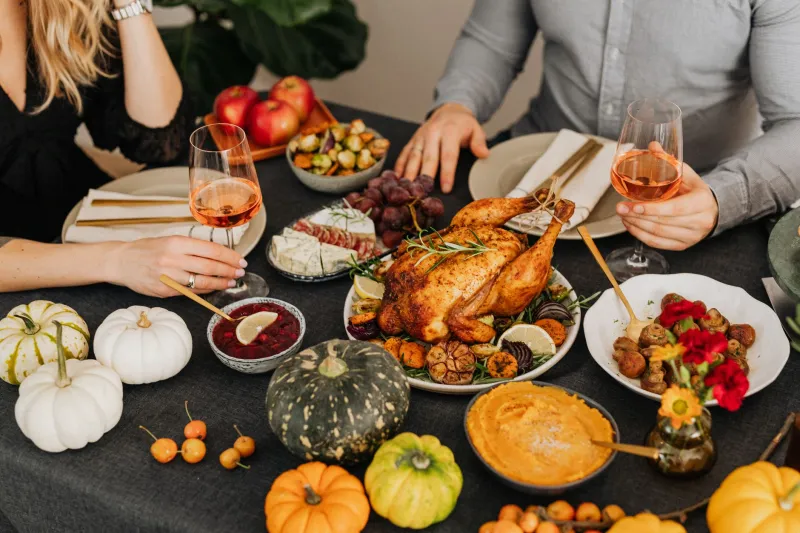
Photo: roast squash lentils walnuts blue cheese winter table vegetarian, via www.pngplay.com
Roast squash is not a lesser roast. It has sweetness, caramelised edges, a soft centre and a tendency to collapse into something closer to a pudding than a vegetable. Put it on a festive table with lentils, toasted walnuts and a wedge of blue cheese, and you have a centrepiece that asks more of wine than a slice of turkey ever does. The problem is not that vegetarian food is hard to pair. The problem is that it is often paired politely: a light, neutral white, chosen because nobody wants to offend the vegetables. That is a waste of a good bottle.
The Centre Doesn't Need a Bone
Old pairing rules were built around meat. Red with beef, white with fish, something sweet with pudding. They were useful shortcuts in a world where the protein was the point. A vegetarian centrepiece changes the argument. The point is no longer the flesh; it is the combination of sweetness, starch, texture and salt. Roast squash brings sugar. Lentils bring earthiness and a little grip. Walnuts bring fat and bitterness. Blue cheese brings salt, cream and a sharp edge. A wine has to deal with all of that, not just one ingredient. The question is not whether it is red or white. The question is whether it has enough acidity, enough texture and enough interest.
Texture Is the Argument
If you take one thing from this, take texture. A wine with a bit of grip — the faint, drying sensation you get from skin contact or gentle tannin — loves walnuts and lentils. A wine with soft, round fruit loves the sweetness of squash. A wine with piercing acidity cuts through blue cheese and stops the whole plate from feeling heavy. A neutral white does none of these things. It sits there, being pleasant, while the food does all the work. You want a wine that pushes back a little.
Three Styles That Earn Their Place
The first is a textured white with a little skin contact. Think of an orange wine made from Pinot Gris, Ribolla or a ripe Chenin Blanc. It has the weight to stand up to roast squash, the bitterness to meet walnuts and the acidity to keep the plate fresh. Serve it lightly chilled, not freezing. The second is a light red, chilled for twenty minutes in the fridge. Gamay, Pinot Noir, Poulsard — something juicy and low in tannin. It works with lentils and mushrooms, and it will not overwhelm the squash. The third is an off-dry Riesling or an Amontillado sherry. The Riesling handles the sweetness of the squash and the salt of the cheese; the sherry handles the blue cheese with a savoury, nutty edge that makes the whole table sit up. None of these are obscure for the sake of it. They are simply more interesting than a polite white.
The Blue Cheese Corollary
Blue cheese is the test of any festive table. It is salty, creamy, sharp and slightly sweet, and it makes most wines taste thin. The answer is not to find a wine that disappears behind it. The answer is to find one that meets it head-on. An Amontillado sherry is the most reliable trick in the book: dry, nutty, saline, with enough acidity to cut the cream. If you prefer wine, an off-dry Riesling or a late-harvest Chenin will do the same job. Pour small glasses. Blue cheese is rich; you do not need a bucket of wine to enjoy it.
Chill It Like You Mean It
A small practical note: the light red should be chilled. Not icy, not room temperature — cool, like a cellar in November. The textured white should be cool but not cold, so the aromas have a chance. The sherry should be served at cellar temperature, which in a modern kitchen means a few minutes out of the fridge. And the squash should be hot. The contrast between hot food and cool wine is one of the small pleasures of a winter table. It is also the reason a heavy, warm red is the wrong choice here: it makes the plate feel hotter and heavier than it is.
The Point of the Bottle
A vegetarian centrepiece is not a compromise. It is a chance to drink something with more acidity, more texture and more nerve than the usual festive bottle. Roast squash, lentils, walnuts and blue cheese do not need a bone to pick with wine. They need a wine that understands the plate. Open the good bottle. The vegetables have earned it.