Crumbs, Cranberry and Cork: Wine for the Festive Sandwich
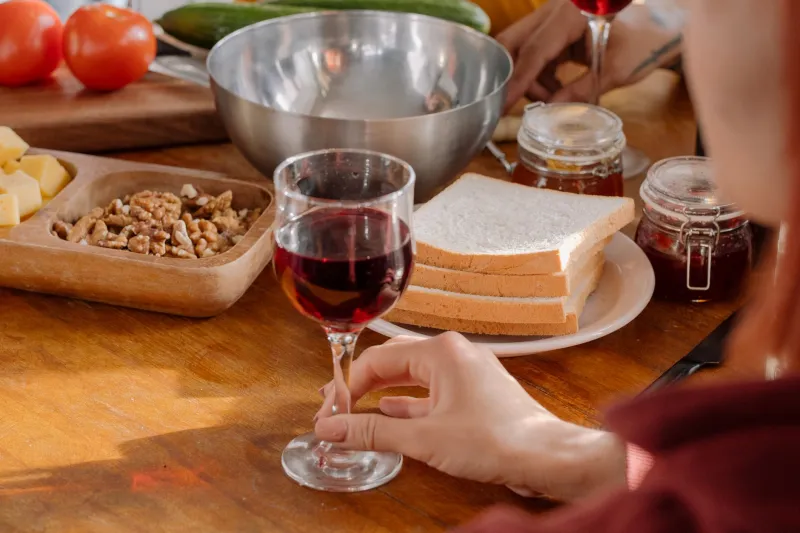
The Christmas sandwich is not a joke. It is a layered dish with salt, fat, acid and sweetness all doing their thing between two slices of bread, and by December 2026 it will have taken over the desk lunch, the train picnic and the fridge shelf marked “do not touch”. The only real problem is the wine. We tend to reach for the same safe bottle — something cold, something white, something bubbly because it is December — and then wonder why the cranberry tastes like jam and the stuffing tastes like a herbaceous afterthought.
Treat the festive sandwich as a real pairing challenge and it becomes much more fun. The same logic we use in the restaurant applies: match the dominant flavour, respect the fat, and keep the alcohol in check. You do not need a decanter or a sommelier’s expression. You need a corkscrew, a fridge that is not overcrowded, and a willingness to think for thirty seconds before you unscrew the usual.
First, Stop Treating It Like a Filing System
A Christmas sandwich is not one thing. A turkey-and-stuffing triangle from the meal deal is a different beast from a doorstep slab made with leftover roast and a slick of Boxing Day gravy. But most versions share the same architecture: something savoury and saline, something rich, something sharp or sweet, and bread doing the quiet work of a plate.
That means a few rules of thumb are more useful than a long list of impossible rules.
- Cranberry likes acidity or a touch of sweetness. Bone-dry, high-tannin reds make it taste tinny. Off-dry Riesling, Chenin Blanc or a fruity Gamay will flatter it.
- Mustard and horseradish hate tannin. If the sandwich has a nose-clearing kick, keep the red light and chilled. Pinot Noir and Gamay are your friends; a big Cabernet is not.
- Melted brie wants bubbles or a waxy white. Creamy cheese plus cranberry is a richness problem, not a red-meat problem. English sparkling or Chenin Blanc cuts through beautifully.
- Stuffing is a herb sandwich. Sage, thyme and onion need an aromatic white with a little texture, not a neutral Pinot Grigio.
- Cold food needs a cold drink. Serve whites properly chilled, reds lightly chilled. A warm red next to a fridge-cold sandwich tastes like disappointment.
Six Bottles for the Desk, the Table and the Last-Minute Dash
These are not trophy bottles. They are practical, food-forward wines that earn their place beside a paper wrapper or a proper plate.
1. Turkey, stuffing and cranberry: 2024 Dr. Loosen “Blue Slate” Riesling, Mosel
Dry German Riesling is the quiet hero of the festive sandwich. Its acidity slices through stuffing and mayo, while a faint hint of fruit softens the cranberry’s tang. The Blue Slate is widely available, modest in alcohol and tastes far more serious than its price suggests. Serve it very cold. If you can only find a supermarket Clare Valley Riesling, that will do nicely too.
2. Brie and cranberry: 2024 Mullineux Kloof Street Chenin Blanc, Swartland
Chenin Blanc has the rare ability to feel waxy and generous without being heavy. That is exactly what a brie sandwich needs: enough texture to meet the cheese, enough acidity to stop the cranberry turning cloying. This South African bottling is a reliable UK shelf-find and works just as well with a wedge of turkey and a smear of chutney.
3. Ham, mustard and pickle: 2023 Domaine Dupeuble Beaujolais
Ham and pickle is a salt-and-acid sandwich, and Gamay is a salt-and-acid wine. Light, juicy and best served with a gentle chill, it handles mustard without flinching and makes a pickled onion taste like a deliberate choice rather than an accident. Keep the bottle in the office fridge for twenty minutes before pouring; not icy, just cool.
4. Beef and horseradish: 2023 Mount Difficulty Roaring Meg Pinot Noir, Central Otago
Roast beef leftovers demand something with a little more grip, but horseradish demands mercy. Pinot Noir threads that needle. This New Zealand bottling has bright red fruit and soft tannin, so it does not fight the heat. If you are buying last-minute, a Bourgogne Rouge or a chilled Beaujolais-Villages will also do the job.
5. Smoked salmon and cream cheese: Nyetimber Classic Cuvée NV, Sussex
English sparkling wine with a smoked salmon sandwich is not showing off; it is simply correct. The bubbles scrub the cream cheese from your palate, the acidity lifts the smoke, and the whole thing feels like a small celebration in the middle of a working day. A Crémant de Loire or a good English sparkling from the supermarket is a perfectly fair substitute.
6. Nut roast, mushroom and chutney: 2023 COS Frappato, Sicily
Vegetarian Christmas sandwiches often get fobbed off with the same safe white. Frappato is more interesting: light, red-fruited, faintly herbal and excellent with mushrooms, nuts and a spoon of spiced chutney. Serve it cool. It is also the bottle most likely to convert someone who claims not to like red wine.
The Office Fridge Is Not a Cellar
A few practical notes for the desk-lunch scenario. First, do not bring a bottle you would mourn if it got knocked over. Second, label it. Third, use a small glass — a 125ml pour is plenty at lunchtime, and it leaves room for the afternoon. If you are buying specifically for the office, half-bottles are your friend; they chill faster and save you from the sad half-full bottle that nobody claims on Friday.
Temperature matters more than people think. Whites and sparkling should be properly cold, around 8–10°C. Light reds are best at 14–16°C, which in practice means twenty minutes in the fridge on a December morning. Do not leave an open bottle next to a radiator or on a windowsill, and do not try to rapid-chill a bottle in the freezer unless you enjoy wine slushies and regret.
Last-Minute Rules for the Supermarket Run
If you are standing in a shop with a basket and no plan, look for words like dry, Kabinett, Clare Valley, Beaujolais-Villages, Chenin Blanc and Crémant. Avoid the obvious traps: heavily oaked Chardonnay, big tannic Shiraz and anything described as “festive” on the label with a cartoon reindeer. The default bottle of Prosecco is not a crime, but it is not a plan either.
And if you are matching several sandwiches at once — the office buffet, the Boxing Day table, the “everyone bring something” supper — do not try to find one wine for everything. Pick two: a dry Riesling or Chenin Blanc for the white-meat-and-cheese side, and a chilled Gamay or Pinot Noir for the ham and beef. That is enough. The cranberry will cope.
The Christmas sandwich does not need ceremony. It needs a cold glass, a decent bottle and a little attention. Crumbs are allowed. So is going back for a second half.