Haggis Doesn't Need a Dram to Taste Like Itself
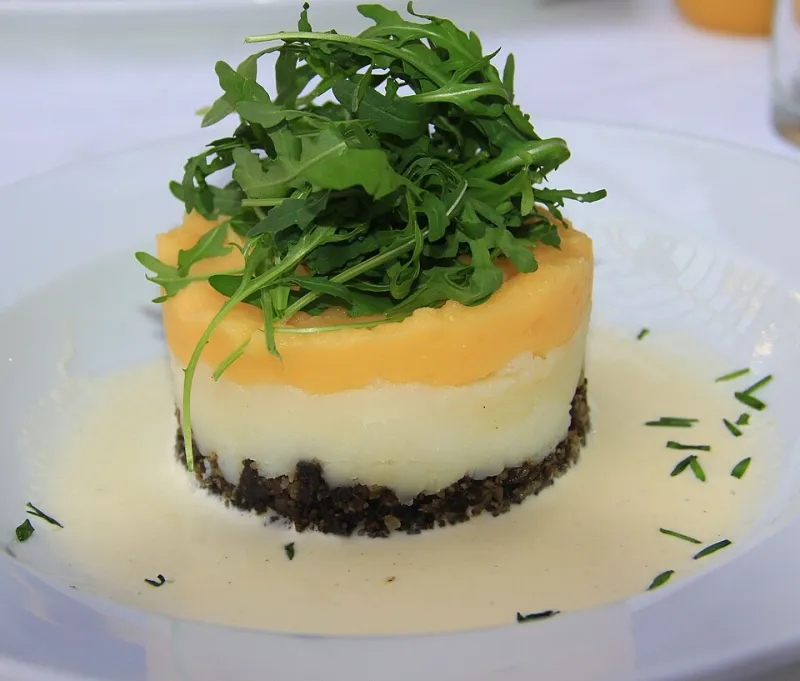
Photo: HLron, CC BY-SA 4.0, via Wikimedia Commons
Burns Night has a soundtrack, and most of it is whisky. The pipes, the Address, the quaich passed hand to hand, the inevitable someone insisting you try a twelve-year-old at cask strength before the haggis has even been carried in.
None of that needs dismantling. What I would like to propose, gently, is that the dram and the dinner are two separate pleasures, and that we have been rather lazy about separating them. Pour wine with the haggis. Keep the whisky for the toast. You will taste more of both.
A dram is a spotlight. Wine is a conversation.
Whisky does one thing magnificently: it announces itself. All that oak and alcohol and concentrated malt arrives at the front of the mouth and stays there, which is exactly right when you are standing up, holding a small glass and saying something sentimental about a poet.
At the table, though, it is a bully. A peated whisky will bury the oats in a haggis. A heavily sherried one can make neeps taste faintly metallic. And because you sip it slowly, in small quantities, it never quite does the job wine does: refresh, cut, reset. Haggis is rich, crumbly, fatty stuff. It wants something to wash through it, not something to stand on top of it.
What is actually on the plate
Haggis is peppery first — white pepper, black pepper, a warm hum rather than heat. Then toasted oats, which give it a grainy, almost nutty sweetness. Then the deeper, ironish savour of offal, with a little onion sweetness underneath. The texture is loose and moist, and it is generous with fat.
Neeps bring earthiness and a sweet, cabbagey pepperiness, plus however much butter you have decided is reasonable (all of it). Tatties bring cream and salt and nothing challenging at all.
So the wine has four jobs: echo the pepper, meet the fat with acidity, avoid grippy tannin that will fight a crumbly texture, and bring enough fruit that the plate does not taste austere.
Three bottles that make the case
Northern Rhône Syrah. Crozes-Hermitage, £18–25, is the sweet spot: blackberry, cracked peppercorn, a suggestion of bacon fat, tannin fine enough not to matter. Saint-Joseph if you want to push the boat out; Cornas if someone else is paying. The pepper in the wine meets the pepper in the haggis, the savoury edge meets the offal. It is the least controversial argument I know.
A textured dry Riesling. Alsace, or a dry Clare Valley Riesling at £16–22. This is the bottle for a table where the neeps have gone heavy on butter and cream. The acidity slices through, the lime and stone fruit flatters the oats, and a Riesling with a few grams of residual sugar — a feinherb, a Kabinett — handles pepper better than almost any dry white. Serve it properly cold, then let it warm in the glass; it will improve as the evening does.
A robust southern French red. Bandol, if you want Mourvèdre's dark, meaty grip at £25–35, or a good Faugères or Minervois at half that for a quieter version. These wines carry the dusty herb character — garrigue, thyme, bay — that makes them taste like they were built for a plate of root vegetables and peppery meat.
If you want a fourth bottle, make it a dry oloroso, served in a small glass alongside the cheese rather than the haggis. That is not a compromise. It is a second act.
The neeps decide more than you think
The single most useful thing you can do is taste your neeps before you choose the bottle. Buttered and lightly peppered? Syrah all the way. Mashed with cream and a suspicious amount of nutmeg? Riesling. Turned into a peppery, mustardy purée that has clearly been designed to make a point? The Bandol, and no regrets.
And if the haggis is a good one — properly peppery, coarse rather than paste — resist the urge to smother it. A spoonful of gravy is fine. A lake of it undoes the whole exercise.
Serving notes
Red at 15–16°C, not 18. That means half an hour out of the cupboard, or twenty minutes in the fridge if your kitchen runs as warm as mine. Open the Syrah an hour ahead and leave the cork out; it does not need a decanter, it needs air. The Riesling should be cold to start and allowed to sit.
Glasses: one decent all-purpose shape will do the whole table, and doing the whole table with one shape is a virtue at a dinner where six people are talking at once. Pour modestly and refill often. A small pour that stays fresh beats a large pour that goes warm and tired by the Toast.
Keep the dram for the toast
Here is the version of the evening I would defend to anyone. Wine on the table, whisky in the quaich. Drink the Syrah with the haggis, the Riesling with the neeps, another glass with the cheese. Then, when the Immortal Memory has been delivered and someone has inevitably half-remembered a verse of Auld Lang Syne, pour the whisky. Small measures, no ice, everyone standing.
It tastes better there. It always does. Whisky is the punctuation of the evening, not the paragraph — and haggis, for all its ceremony, is a supper that wants a proper glass of something beside it.