Half a Bottle, Twice the Point: Rethinking the Midweek Pour
Photo: Manufacture nationale de Sèvres, CC0, via Wikimedia Commons
On a Tuesday in November, two people sit down to dinner. One wants white, one wants red. Neither wants more than a glass and a half. The wine list offers a dozen full bottles, a handful of glasses and, tucked at the bottom in smaller type, a single half-bottle of something white. It is a familiar scene, and it is a quiet failure of hospitality.
The half-bottle is not a compromise. It is a precision instrument. It is the right size for a midweek dinner, the right size for a solo diner, and the right size for a table where the couple cannot agree on a single bottle. In the UK we have learned to treat the 375ml bottle as an afterthought — a format for aeroplane trolleys and hospital trays — when it should be one of the first things a restaurant gets right.
The quiet maths of a smaller bottle
A half-bottle costs more per millilitre to produce, ship and store. It carries the same glass cost, the same label approval, often a worse wholesale ratio and a smaller commercial return. That justifies a modest premium. It does not justify the punitive pricing that turns a half-bottle of Chablis into a £38 decision when the full bottle is £52.
A sensible rule is 55–65% of the full-bottle price. The guest can see the logic. The restaurant still makes its margin. More importantly, the half-bottle becomes a live option rather than a curiosity. If a restaurant wants to sell more of them, it should put them on the first page, not in an appendix. It should offer mixed pairs — a half of white and a half of red — for two people who want different things. It should train staff to say, without apology, that a half is often the better call on a Tuesday.
Cold enough, warm enough
A smaller bottle changes faster. That is a gift if you handle it properly. A half of Chablis dropped into an ice-water bath will be ready in eight minutes. A half of light red will come down from room temperature to 16°C in about 20 minutes in the fridge. The same bottle will also warm up faster on the table, so a small ice bucket or a cool sleeve is not fuss; it is service.
Serve white at 8–10°C, not at the temperature of a hospital corridor. Serve light red at 14–16°C, not at radiator heat. If the wine is tight, a quick pour into a small jug is enough. A half-bottle does not need a decanter and a ceremony. It needs attention.
The glass still matters
A half-bottle should never be served in a tiny glass. Use the same glass you would use for the full bottle. Pour 75ml, not 125ml. A 375ml bottle gives three modest glasses or two generous ones with a final top-up. For a solo diner, that is a proper dinner: one glass with the starter, one with the main, one with cheese.
The smaller pour also lets a table build a meal rather than commit to a single wine. A half of something crisp at the start, a half of something earthy with the main. That is not indecision. It is appetite.
Four plates, four halves
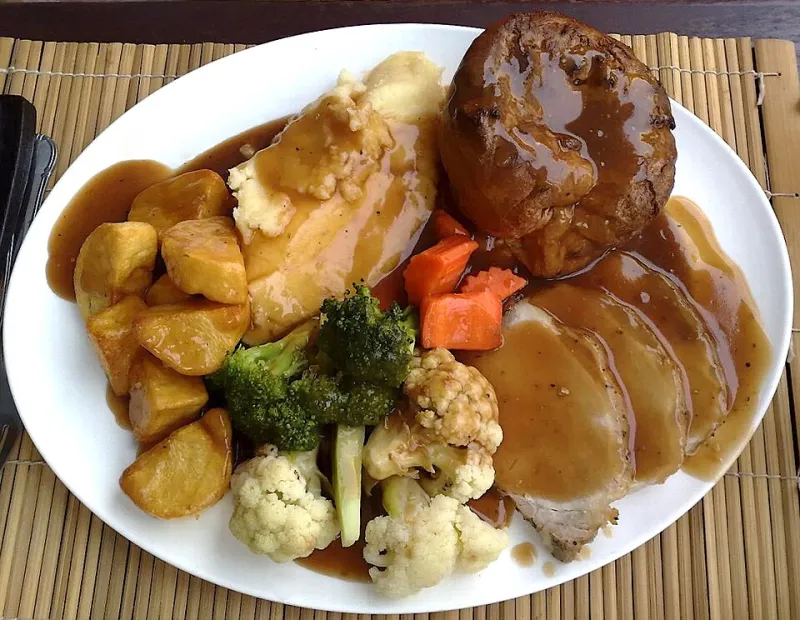
A half of Chablis with grilled lemon sole, brown butter and capers. The wine is lean enough to cut the butter, ripe enough to meet the fish. A half of Chinon with ham hock, lentils and mustard. The Cabernet Franc freshness lifts the pork, and the lentils give it something to settle into. A half of Mosel Riesling with a roast pork chop and apple sauce. The sweetness meets the fruit, the acidity clears the fat. A half of Beaujolais with mushrooms on toast. Earthy, juicy, uncomplicated — exactly what a Tuesday wants.
None of these pairings needs a full bottle. Each of them is better for the smaller format, because the wine stays fresh to the last glass and nobody is left negotiating the final inch of a warm bottle.
What a good list does
A good wine list treats the half-bottle as a first-class citizen. It lists them early. It offers a mixed pair. It prices them fairly. It serves them in proper glassware. It does not call them 'mini bottles' or hide them under a heading marked 'small formats', as if the guest has asked for something faintly embarrassing.
There is also a practical hospitality point. A half-bottle lets a couple spend a little more on food, or add a glass of something sweet at the end, without feeling that the table has tipped into excess. It lets a solo diner order wine without committing to a bottle they will not finish. It lets the restaurant open something interesting on a quiet night.
Generosity is not the same as volume. A half-bottle, served cold enough and in a proper glass, is generous in the way that matters: it gives everyone at the table exactly what they wanted, and leaves the Tuesday intact.