The Quiet Arithmetic of the House Pour
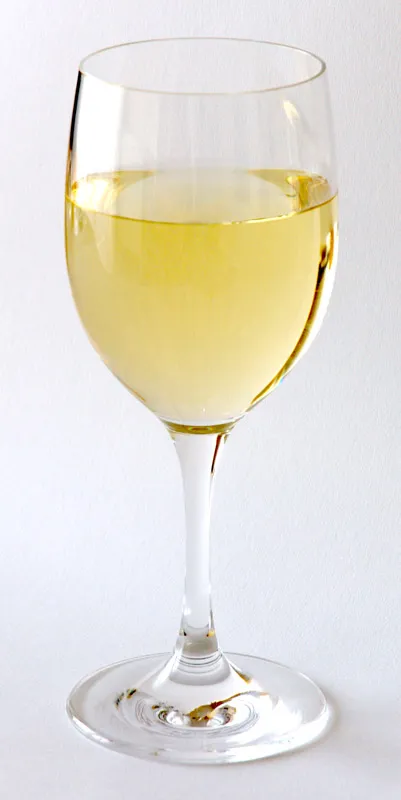
Photo: André Karwath aka Aka, CC BY-SA 2.5, via Wikimedia Commons
The first glass is an introduction
The house pour is easy to overlook. It sits at the top of the list, often without a vintage, sometimes without a producer's name, and it is ordered by people who do not want to make a decision. That is the reputation. The reality is more interesting. A by-the-glass list is a restaurant's working philosophy in miniature: what it can afford to open, what it can keep fresh, what it thinks you should drink with the food it is cooking this week.
At a wine-led restaurant such as Vine, the house pour is not a single wine so much as a rotating set of decisions. The kitchen changes the menu with the seasons; the bar changes the list with the menu. A white that tasted right beside late-summer tomatoes can feel thin next to roast celeriac and brown butter. A red that was perfect with lamb in April can bully a mushroom tart in October. The by-the-glass list has to move faster than the bottle list, and it has to do so without making a fuss.
Margin, waste and the honest middle
There is a myth that the house wine is where restaurants make their money and the fine wine is where they make their reputation. In practice, the by-the-glass list is a balancing act between margin and waste. Every open bottle is a small bet. A £6.50 glass and a £12 glass can both be honest, but they are doing different jobs. The cheaper pour has to survive a quiet Tuesday; the more expensive one has to justify being opened at all.
This is where the house pour earns its keep. It is usually the wine that can be kept fresh under gas for a day or two, that tastes good at the temperature of a busy service, and that does not need a lecture to be enjoyed. It might be a Picpoul from the Languedoc, a dry Riesling from the Mosel, a Loire Cabernet Franc or a lighter Rhône. In 2026, it might also be an English sparkling wine by the glass — no longer a novelty, but still a statement about where the list is looking.
The buyer starts with the menu, not the bottle. If the kitchen is doing something with hazelnuts and butter, the house white needs a little texture. If there is a dish with charred leeks and goat's curd, the house red needs freshness rather than weight. The house pour is not the wine that failed to sell; it is the wine that has survived every argument about price, freshness, food and the kind of room the restaurant wants to be.
How a pour earns its place
A by-the-glass wine has to pass three tests. First, it has to taste good on its own — because plenty of guests will order it before the food arrives. Second, it has to taste good with the menu — because the whole point of a wine-led restaurant is that the glass and the plate are in conversation. Third, it has to make sense as a business: the bottle price, the pour cost, the VAT, the service charge and the wastage all have to add up to something that feels fair to the guest and viable for the restaurant.
That last test is the quiet one. A wine that oxidises after 48 hours is expensive even if it is cheap. A wine that needs three minutes of explanation is expensive in a different way. The best house pours are the ones that can be recommended in a sentence and remembered a week later. They do not need to be the most exciting wine on the list. They need to be the most useful.
A diner's guide to the house option
If you default to the house pour, you are not settling. You are taking the restaurant at its word. But it is worth asking what the house wine is, where it comes from and what it is like with the dish you have ordered. A good server will have an answer. A great one will steer you if the house option is not the right glass for the moment.
There is also no shame in ordering the house white and then asking for a different glass with the main. The by-the-glass list is not a loyalty scheme. It is a set of invitations. The house pour is simply the first one — the glass that says: start here, and see where the evening goes.
The clearest sentence on the list
The wine list can hide behind long descriptions and famous names. The by-the-glass list cannot. It has to be open, fresh and ready to be drunk tonight. That is why it is one of the clearest statements a wine-led restaurant makes. It tells you what the kitchen believes, what the buyer is excited about and how much the room trusts its guests to try something without a safety net.
The house pour has a story, then. It is not the cheap option or the safe option. It is the glass that has been argued over, tasted, priced and poured until it belongs beside the menu. Order it with confidence — and if you love it, ask what it is. That is how the quiet arithmetic of the house pour becomes a conversation.