Noon Until the Light Fades: The November Lunch That Refuses to Rush

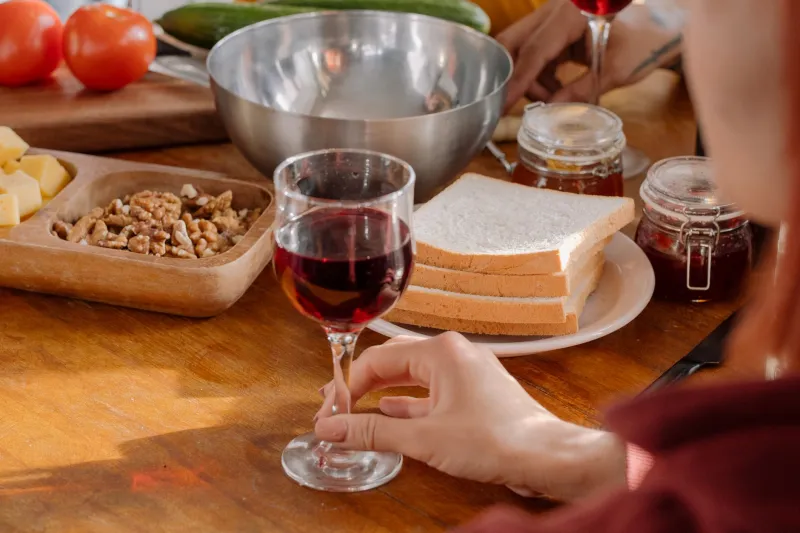
Photo: blacklunchtable, Public domain, via Wikimedia Commons
November has a way of making the day feel borrowed. The light arrives late, leaves early, and by three o'clock the windows have that soft grey look that says another year is folding itself away. It is precisely the sort of month that rewards a long lunch: not a boozy marathon, not a formal tasting, but a table booked for the afternoon with no particular place to be.
Why November asks for a slower table
Summer lunches are easy. The sun does half the work. In November, a long lunch is a deliberate act, and that is part of its pleasure. You are not stealing a sunny afternoon from the garden; you are making a small, warm room of time in the middle of a dark weekend. The festive season is already clearing its throat in the background, all those diaries filling with office parties and school fairs and the annual negotiation over whose turn it is to host. A long lunch is the antidote: one table, a few people, and enough hours to actually speak to them.
It also suits the way we eat when the weather turns. November food is generous by nature — roots, mushrooms, game, cabbage, apples, the last of the pears. It wants slow cooking and a little acidity. It wants something to drink that can move from a first salty nibble to a spoonful of pudding without the table having to start again.
One table, several courses, no countdown
The long lunch works best when it is built rather than piled. A menu that stretches from noon to four should have a rhythm: something small and savoury to begin, a main course that does not demand attention, cheese if the table is so inclined, and a pudding that is more than a gesture. Bread and good butter are not filler; they are the opening act. A bowl of olives or a few slices of cured something can buy the kitchen time and give the first glass a job.
At home, this is a matter of cooking one thing well and assembling the rest. In a restaurant, it is a question of pacing. The worst long lunch is the one where every course lands in a hurry and the table is left staring at coffee by half past two. The best is the one where the gaps are comfortable, the water is replenished without asking, and nobody is hovering with a card machine while the last of the conversation is still finding its feet.
Wines that carry a conversation
The wine list for a long lunch should be chosen for range, not volume. You do not need a different bottle for every course. You need two or three that can overlap, and a willingness to let the table taste across them. A dry sparkling wine is a fine place to start — English sparkling has become genuinely good, and its lemon-and-bread character sits happily alongside salty things, roast chicken, and even a mushroom tart. If the table prefers still wine, a Chablis or a crisp Loire white will do the same job with less ceremony.
For the middle of the meal, think about weight rather than power. A light red — Gamay, a gentle Pinot Noir, a cool-climate Cabernet Franc — can handle root vegetables, guinea fowl, or a plate of mushrooms without bullying the food. If there is game on the table, a slightly more structured red is fair enough, but keep the tannins in check. November food is earthy enough already; it does not need a wine that tastes like a hedge in a hurry.
And then there is the final glass. A dry sherry, a tawny Port, or a small pour of Madeira can carry the table from cheese to coffee with a welcome change of gear. It also signals that lunch is not over so much as settling in. The point is not to drink more; it is to drink with a sense of occasion that lasts longer than the main course.
The menu that earns four hours
A long lunch menu should be unfussy enough to share and interesting enough to reward the time. Start with something briny or crisp: oysters if you are lucky, a little smoked fish, or a salad with bitter leaves and a sharp dressing. Move on to a bird or a piece of slow-cooked pork, with potatoes done properly and a vegetable that has seen some butter. Cheese is not compulsory, but a single well-chosen one — something nutty and firm, perhaps — makes the transition to pudding feel less abrupt.
Pudding should be seasonal and not too sweet. Apple, pear, quince, a little chocolate, a spoonful of something creamy. Coffee comes as the light goes, and if the restaurant is worth its salt, it will not hurry you out of the door. That is the quiet luxury of the long lunch: the feeling that the table is yours for the afternoon, not just for the next sitting.
Generous, not indulgent
There is a difference between a generous lunch and an indulgent one, and it usually comes down to care rather than quantity. Generosity is a jug of water on the table, bread that keeps coming, a wine list with something affordable and interesting on it, and staff who understand that a four-hour lunch is not a failure of turnover. Indulgence is another bottle nobody needs and a bill that makes everyone quiet on the way home.
The long lunch is not an excuse to abandon moderation. It is an excuse to slow down. Order the smaller glass. Drink the water. Share the pudding. Take the train. The point is not to float out of the restaurant at dusk in a haze; it is to leave with the pleasant feeling that the day has been properly used.
In November, that is no small thing. The light goes early, the festive season is coming, and the temptation is to rush towards it. A long lunch says otherwise. It says: sit down, pass the bread, open something good, and let the afternoon take its time. The clocks can wait.