Wine First, Menu Second: A November Supper With One Bottle
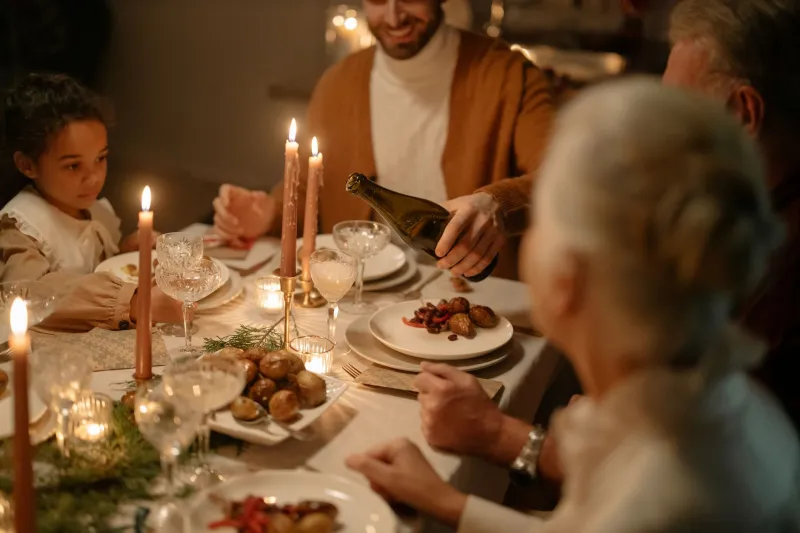
Most dinner planning starts with food and ends in a small panic about wine. You decide on chicken, then wonder whether a Chardonnay will bully it, whether a red will sulk, whether you should open something else entirely. It is a lot of admin for a Tuesday. The quieter, more generous approach is to buy one bottle you actually want to drink, then build the menu around it. No cellar, no sommelier, no colour-coded spreadsheet. Just a bottle, a few November ingredients and a plan that works backwards.
Why the bottle goes first
A bottle sets the register of the evening. It tells you how rich the food should be, how much acidity you want on the plate and whether pudding is a good idea or a step too far. If you start with the wine, you are not matching a finished dish to a stranger. You are cooking in the same key.
It also solves the hosting problem neatly. One good bottle, chosen with a little thought, is more convivial than three half-hearted ones opened in a fog of indecision. You chill it properly, open it at the right moment and let it do its job. The menu becomes a response rather than a test.
Here are three routes for a November supper. Each is a one-bottle dinner, built around a different style. None requires a decanter the size of a traffic cone.
Route one: a textured white
Start with a white that has some weight and chew—not a neutral fridge-cold number, but something with apple, chamomile and a faint honeyed edge. A Swartland Chenin Blanc is ideal. A.A. Badenhorst 'Secateurs' Chenin Blanc is widely available in UK independents and larger wine shops, usually around £15–20, and it has enough texture to handle autumnal food without turning syrupy. Mullineux 'Kloof Street' Chenin Blanc is another good bottle to look for.
The menu
Begin with leek and celeriac soup, finished with hazelnut oil and a little crisp sage. The wine's acidity cuts through the cream; the hazelnut picks up its savoury edge. If you want something more substantial, smoked trout with pear and watercress works beautifully.
For the main course, roast cod or pollack with brown butter, savoy cabbage and crushed potatoes. Or roast chicken with tarragon and a tray of squash underneath. Chenin has enough body for chicken but enough snap for fish. Keep the seasoning bright—salt, lemon, plenty of black pepper.
Pudding is where people overreach. A dry Chenin does not want a sticky toffee situation. Serve a wedge of Comté or aged Cheddar with oatcakes and a few grapes instead. It is a course, it is November-appropriate and it lets the wine finish the meal without a fight.
Route two: a gentle red
A gentle red is not a weak red. It is a red with soft tannins, fresh fruit and a bit of chill about it—the sort of bottle that suits sausages, lentils and mushrooms without demanding a steak. Beaujolais is the obvious answer, and Domaine Dupeuble Beaujolais is a reliable, widely available example. Mencía from Bierzo is another route; Pétalos from Descendientes de J. Palacios is easy to find and generous with roast vegetables.
The menu
Open with garlic mushrooms on toast, cooked slowly with thyme and a splash of something dry. The wine's earthiness meets the mushrooms; its acidity keeps the butter in check. If you want a starter that feels more like a meal, a small plate of charcuterie and cornichons is never a bad idea.
For the main event, braised lentils with sausages and cavolo nero. Brown the sausages, soften leeks and carrots, add lentils and stock, then finish with mustard and parsley. A gentle red loves this kind of cooking—savoury, slightly smoky, not too heavy. Roast guinea fowl with grapes and bacon is another good match if you want something more celebratory.
For pudding, baked pears with a little dark chocolate and crème fraîche. Keep the sweetness low. The wine will handle the fruit; it will not thank you for a sugar bomb.
Route three: a fortified bottle
This is the one that raises eyebrows, so let us be clear: a bottle of fortified wine can carry a whole evening if you build the menu for it. A 10-year-old tawny port—Graham's, Taylor's, Quinta do Noval—is not just a pudding wine. It has nuttiness, dried fruit and a savoury edge that works with game, mushrooms and hard cheese. A 5-year-old Verdelho Madeira from Blandy's is another excellent option, with more acidity and a salty twang.
The menu
Start with roasted squash, sage and ricotta on toast. The tawny's nutty sweetness picks up the squash; the Madeira's acidity cuts through the cheese. Then braise venison sausages with parsnip mash and a few prunes, or cook a short rib slowly with prunes and thyme. Fortified wine and dark, sticky meat is an old, good friendship.
Finish with dark chocolate mousse or an almond tart. A small glass of the same bottle, rather than a new one, keeps the whole dinner coherent. It is a generous way to end an evening—and it means you only had to choose once.
The practical bits
Buy the bottle from a shop you trust—Majestic, Waitrose, Berry Bros. & Rudd or your local independent. Ask for help if you want it. Chill whites properly but not to oblivion; take reds out of the cold room a little before serving. One decent glass shape will do for all three routes. And do not over-season the food to compensate for a wine you are unsure about. Cook it simply, taste as you go and let the bottle meet you halfway.
A one-bottle dinner is not a compromise. It is a decision made early, with confidence, so that the rest of the evening can be spent at the table rather than in the kitchen worrying. Pick the wine. Then cook the November you actually want to eat.